A business website is often the first interaction a potential customer has with a company. Before making a phone call, sending an email, or requesting a quote, most people visit a website to learn more about the business and decide whether it feels trustworthy. That first impression is formed in seconds, and it can determine whether a visitor continues exploring or leaves to find another provider.
Many businesses invest heavily in creating a visually appealing website, believing that an attractive design alone will drive enquiries and sales. While professional design certainly contributes to a positive experience, appearance is only one part of the equation. A high-converting website is carefully planned to guide visitors, answer their questions, build confidence, and encourage them to take action.
Every element on a website should have a purpose. From the headline on the homepage to the placement of a contact form, each component should help move visitors closer to becoming customers. Businesses that understand this create websites that do more than represent their brand—they become valuable tools for generating opportunities and supporting long-term growth.
A Clear Value Proposition
Visitors should never have to guess what a business does. Within moments of arriving on a website, they should understand the services being offered, the type of customers the business serves, and the value it provides. If this information is unclear or hidden beneath generic marketing language, many visitors will leave before exploring further.
A strong value proposition focuses on clarity rather than complexity. Instead of using broad statements that could apply to almost any business, successful websites communicate specific benefits that resonate with their audience. Whether a company specialises in software development, logistics, healthcare, or consulting, its message should immediately explain how it helps solve customer challenges.
Clear messaging also establishes confidence. When visitors understand exactly what a business offers, they are more likely to continue reading, explore additional pages, and eventually make contact.
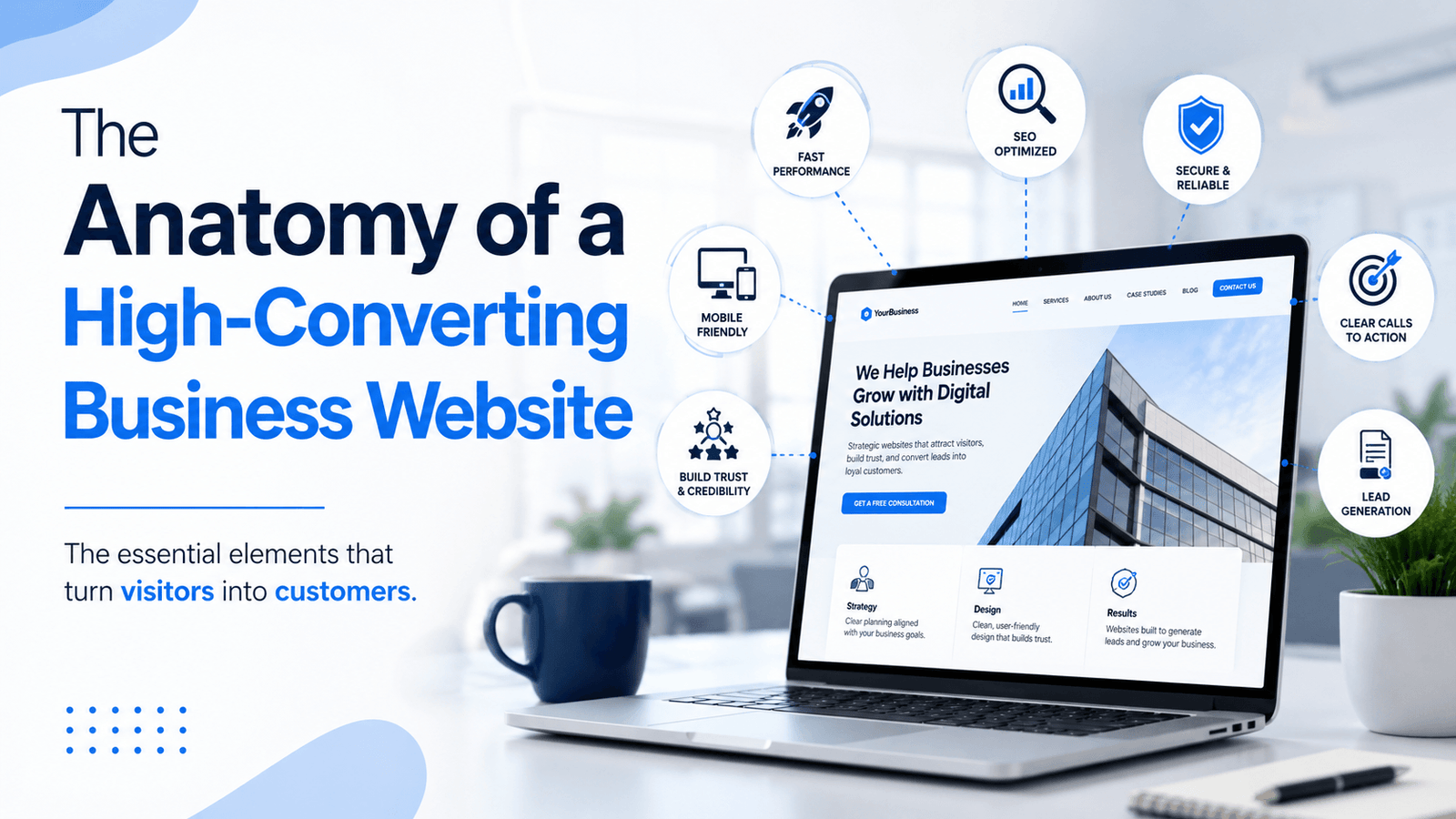
Fast Loading Performance
Website speed has become one of the most important factors influencing user experience. Today's customers expect information to be available almost instantly, and even a few extra seconds of loading time can lead to frustration. Many visitors simply return to search results and choose a competitor whose website responds more quickly.
Performance affects more than user satisfaction. Search engines also reward fast, well-optimised websites, making speed an important contributor to online visibility. A website that performs efficiently is more likely to rank well, attract qualified visitors, and provide a smoother browsing experience across all devices.
Improving performance often involves optimising images, reducing unnecessary scripts, implementing efficient hosting, and ensuring clean, well-structured code. These technical improvements may happen behind the scenes, but their impact is immediately noticeable to visitors.
Fast websites create a sense of professionalism. They demonstrate that a business values its customers' time and is committed to delivering a quality digital experience from the very first interaction.
Mobile-First Design
The majority of website traffic now comes from mobile devices. Customers research products, compare services, and submit enquiries from their phones throughout the day. If a website performs poorly on smaller screens, businesses risk losing valuable opportunities before visitors even engage with their content.
A mobile-friendly website is more than a desktop version that has been resized. It is designed specifically to provide an effortless experience regardless of screen size. Navigation should remain simple, text should be easy to read without zooming, buttons should be large enough to tap comfortably, and important information should always remain accessible.
Mobile-first thinking also encourages businesses to focus on what matters most. Limited screen space naturally prioritises essential content and reduces unnecessary distractions, resulting in cleaner layouts and more focused user journeys.
Providing an excellent mobile experience demonstrates that a business understands how modern customers interact with digital platforms. It also ensures that potential customers can connect with the business whenever and wherever they choose.
Simple Navigation That Guides Visitors
Every visitor arrives with a goal. Some want to learn about services, others are looking for pricing, while many simply want to know how to get in touch. Navigation should help them reach their destination quickly without forcing them to search through multiple pages.
Complicated menus, inconsistent layouts, and confusing page structures often create frustration. Visitors should never feel lost or uncertain about where to click next. Instead, navigation should feel intuitive, with logical page organisation and clear pathways that encourage users to continue exploring.
Successful websites organise information according to customer needs rather than internal company structures. Instead of overwhelming visitors with dozens of menu options, they present information in a way that feels natural and easy to understand.
The easier it is for visitors to find answers, the more likely they are to remain engaged and take the next step towards becoming a customer.
Strong Calls to Action
A surprising number of business websites fail to tell visitors what they should do next. After reading about services or browsing a portfolio, users are often left wondering whether they should call, send an email, complete a contact form, or request a consultation.
Every important page should include a clear and relevant call to action. Rather than using vague phrases, businesses should guide visitors towards meaningful next steps that align with their objectives. Whether that action is requesting a proposal, scheduling a meeting, or speaking with an expert, it should feel like a natural continuation of the customer's journey.
Effective calls to action are visible without being intrusive. They appear at appropriate moments throughout the website, providing opportunities for engagement without interrupting the browsing experience.
A high-converting website removes uncertainty. Instead of leaving visitors to decide what comes next, it confidently guides them towards taking action.
Trust Signals That Build Confidence
People rarely make purchasing decisions based solely on a company's claims. Before contacting a business, most visitors look for evidence that others have had positive experiences. Trust plays a significant role in converting website visitors into customers, especially when they are comparing multiple providers offering similar services.
Effective trust signals can take many forms. Client testimonials, case studies, project portfolios, industry certifications, awards, and recognizable client logos all help reassure visitors that they are dealing with a credible business. Even simple elements such as professional photography, transparent contact information, and clearly written policies contribute to a stronger sense of reliability.
Trust is also built through consistency. A website with outdated content, broken links, or inaccurate information can quickly undermine confidence, regardless of how attractive the design may be. Businesses that regularly review and update their websites demonstrate professionalism and attention to detail, qualities that customers naturally value.
Building trust is not about overwhelming visitors with information. It is about providing enough reassurance at the right moments so they feel comfortable taking the next step.
Content That Answers Customer Questions
Every visitor arrives with questions, whether they realise it or not. They want to understand how a product or service works, whether it meets their needs, how much experience the company has, and what makes it different from the competition.
High-converting websites anticipate these questions and answer them through clear, informative content. Instead of filling pages with technical jargon or lengthy promotional messages, successful businesses focus on providing practical information that helps visitors make informed decisions.
Well-structured service pages, frequently asked questions, blog articles, and case studies all contribute to building authority while reducing uncertainty. The goal is not simply to describe what the business offers but to demonstrate expertise and provide genuine value throughout the customer's journey.
Quality content also supports search engine optimisation, making it easier for potential customers to discover the business through organic search. When content is written with both people and search engines in mind, it becomes a long-term asset that continues attracting qualified visitors over time.
Search Engine Optimisation That Supports Visibility
Even the most impressive website cannot generate enquiries if potential customers never find it. Search engine optimisation provides the foundation for long-term visibility by helping businesses appear when people search for relevant products or services.
Effective SEO extends far beyond adding keywords to a webpage. It involves creating valuable content, improving website performance, organising information logically, and ensuring that every page is technically sound. Search engines increasingly reward websites that provide an excellent user experience, making SEO closely connected with many of the elements already discussed.
Businesses should view SEO as an ongoing strategy rather than a one-time task completed during the initial website launch. Search trends evolve, competitors update their websites, and customer expectations change over time. Regularly reviewing and improving website content helps maintain visibility while creating new opportunities to attract potential customers.
When combined with high-quality content and a strong user experience, SEO becomes one of the most effective ways to generate consistent, long-term business growth.
Lead Capture Should Be Effortless
Once visitors decide they want to contact a business, the process should be as simple as possible. Unfortunately, many websites introduce unnecessary barriers through lengthy forms, confusing enquiry processes, or limited contact options.
A high-converting website makes communication convenient. Contact forms should request only essential information, while clear email addresses, phone numbers, and enquiry buttons remain easy to find throughout the website. Some businesses also benefit from features such as appointment scheduling, live chat, or AI-powered assistants that provide immediate responses outside normal business hours.
Every interaction should encourage visitors rather than discourage them. Removing unnecessary steps increases the likelihood that potential customers will complete their enquiry instead of postponing the decision or contacting a competitor.
Lead generation is not about collecting as much information as possible. It is about creating a smooth, welcoming experience that makes starting a conversation effortless.
Measuring and Improving Performance
Launching a website is only the beginning. Customer behaviour changes, business goals evolve, and new opportunities emerge over time. Businesses that continuously analyse website performance are better positioned to identify areas for improvement and maximise conversions.
Analytics provide valuable insights into how visitors interact with a website. Businesses can understand which pages attract the most attention, where visitors leave the website, how long they stay, and which calls to action generate the highest engagement. These insights allow informed decisions based on real user behaviour rather than assumptions.
Continuous improvement does not always require major redesigns. Small adjustments such as refining page content, improving navigation, simplifying forms, or updating calls to action can significantly enhance overall performance. Incremental improvements made consistently often produce greater long-term results than infrequent, large-scale redesigns.
A website that evolves alongside the business remains relevant, competitive, and capable of supporting future growth.
Final Thoughts
A high-converting business website is not defined by impressive animations or the latest design trends. Its success is measured by how effectively it helps visitors become customers. Every element, from clear messaging and fast performance to intuitive navigation and trust-building content, should work together to create a seamless experience that encourages action.
Businesses that view their website as an active part of their growth strategy consistently achieve better results than those that treat it as a static online presence. As customer expectations continue to evolve, successful websites must also evolve by embracing better user experiences, stronger content, improved performance, and continuous optimisation.
Ultimately, the anatomy of a high-converting website is built on understanding the needs of its visitors. When businesses focus on delivering clarity, trust, accessibility, and value at every stage of the customer journey, their website becomes more than a place to showcase services—it becomes one of the most effective tools for generating opportunities and driving sustainable business growth.
Share this article